In related topics, I’m still peeved that my freezer, unlike my camera, needs to do a full back-and-forth trip (in this case to Samsung’s SmartThings servers) just to notify my Home Assistant server that the door was left open.
It does, and as a matter of fact I was unaware that it had automation support until after I read the manual. But I like to keep statistics on my devices, and I’m not exactly happy about losing them when Samsung or SmartThings decide to pull the plug. Hopefully I manage to patch some alternate firmware somehow by then.
Have you captured the data with Wireshark to see if it’s readable? Could you have adguard/pihole/etc spoof the target DNS to a local server that then strips the data out of the packets and forwards them on to your homeassistant? Or have they garbled the information with some proprietary nonsense?
If your freezer is on your local wifi and your computer is also on the local wifi you should be able to see all the packets it is transmitting over the wifi with Wireshark on your computer. If either your computer or freezer has a hard connection then you’ll need a little more trickery as switches/home routers minimise network congestion by directing traffic to specific MAC addresses as required.
Assuming you are all wifi, basically you load Wireshark (is free software, easily downloaded) and tell it to capture all packets from your wifi adaptor (there should be a handy option on the initial screen when you load the application). Once you start capturing you’ll be capturing everything on your wifi so it pays to be quick with what you want to achieve to minimise the data.
So, once you start capturing you open your fridge door a few times, leave it open till it beeps, maybe do that twice, then stop capturing. Following that you will just need to filter the capture by all packets from your fridges network IP or MAC (you should be able to find these from your home router). Once you have all the packets you should be able to click on them and expand all the details to see what data they are sending and where it’s being sent to. You should also see all the packets coming back from the vendor.
So I don’t need to manually MITM my freezer to pass through my computer directly, just be sure both are in the same network? Alright, I might test it later
I wonder how expensive would it be to import one of those. The system is also able to track and adjust temperature, so a simple ESP32 wouldn’t be enough to replace that circuitry


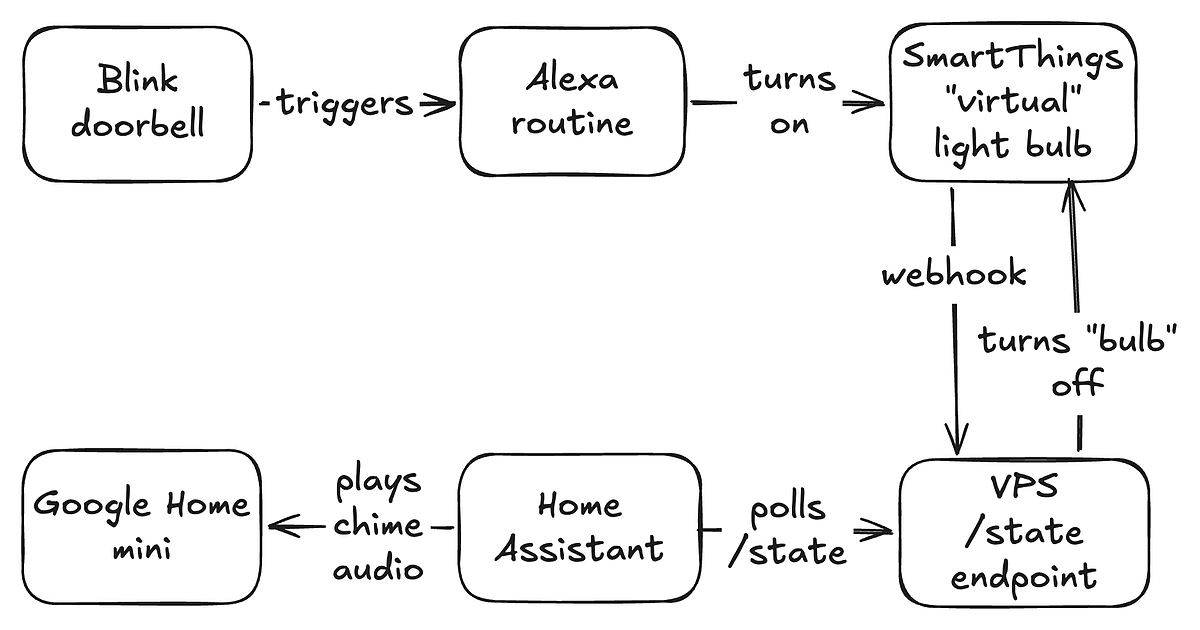
In related topics, I’m still peeved that my freezer, unlike my camera, needs to do a full back-and-forth trip (in this case to Samsung’s SmartThings servers) just to notify my Home Assistant server that the door was left open.
At least it CAN notify. I’ve got a zigbee door sensor glued to the side of the freezer and the door!
My fridge is tilted back a very small amount so the door closes on it’s own.
This is technology I can get behind. How many tokens does a closure take on average?
Can’t it just beep?
It does, and as a matter of fact I was unaware that it had automation support until after I read the manual. But I like to keep statistics on my devices, and I’m not exactly happy about losing them when Samsung or SmartThings decide to pull the plug. Hopefully I manage to patch some alternate firmware somehow by then.
No, it should definitely not need to talk to Samsung to share basic information with your homeassistant
I agree with that, it’s ridiculous that a known standard still depends on a centralized server
Have you captured the data with Wireshark to see if it’s readable? Could you have adguard/pihole/etc spoof the target DNS to a local server that then strips the data out of the packets and forwards them on to your homeassistant? Or have they garbled the information with some proprietary nonsense?
I have no idea of how to connect to my freezer directly to capture Wireshark packets, is there a tutorial for that?
If your freezer is on your local wifi and your computer is also on the local wifi you should be able to see all the packets it is transmitting over the wifi with Wireshark on your computer. If either your computer or freezer has a hard connection then you’ll need a little more trickery as switches/home routers minimise network congestion by directing traffic to specific MAC addresses as required.
Assuming you are all wifi, basically you load Wireshark (is free software, easily downloaded) and tell it to capture all packets from your wifi adaptor (there should be a handy option on the initial screen when you load the application). Once you start capturing you’ll be capturing everything on your wifi so it pays to be quick with what you want to achieve to minimise the data.
So, once you start capturing you open your fridge door a few times, leave it open till it beeps, maybe do that twice, then stop capturing. Following that you will just need to filter the capture by all packets from your fridges network IP or MAC (you should be able to find these from your home router). Once you have all the packets you should be able to click on them and expand all the details to see what data they are sending and where it’s being sent to. You should also see all the packets coming back from the vendor.
So I don’t need to manually MITM my freezer to pass through my computer directly, just be sure both are in the same network? Alright, I might test it later
Just connect an ESP32 to the door switch and use that to notify your HA server.
I wonder how expensive would it be to import one of those. The system is also able to track and adjust temperature, so a simple ESP32 wouldn’t be enough to replace that circuitry
The ESP32 wouldn’t be able to adjust settings without a lot of hacking, but it wouldn’t be hard to add a temperature sensor so it could monitor that.