People prison Surprise Animal Prison
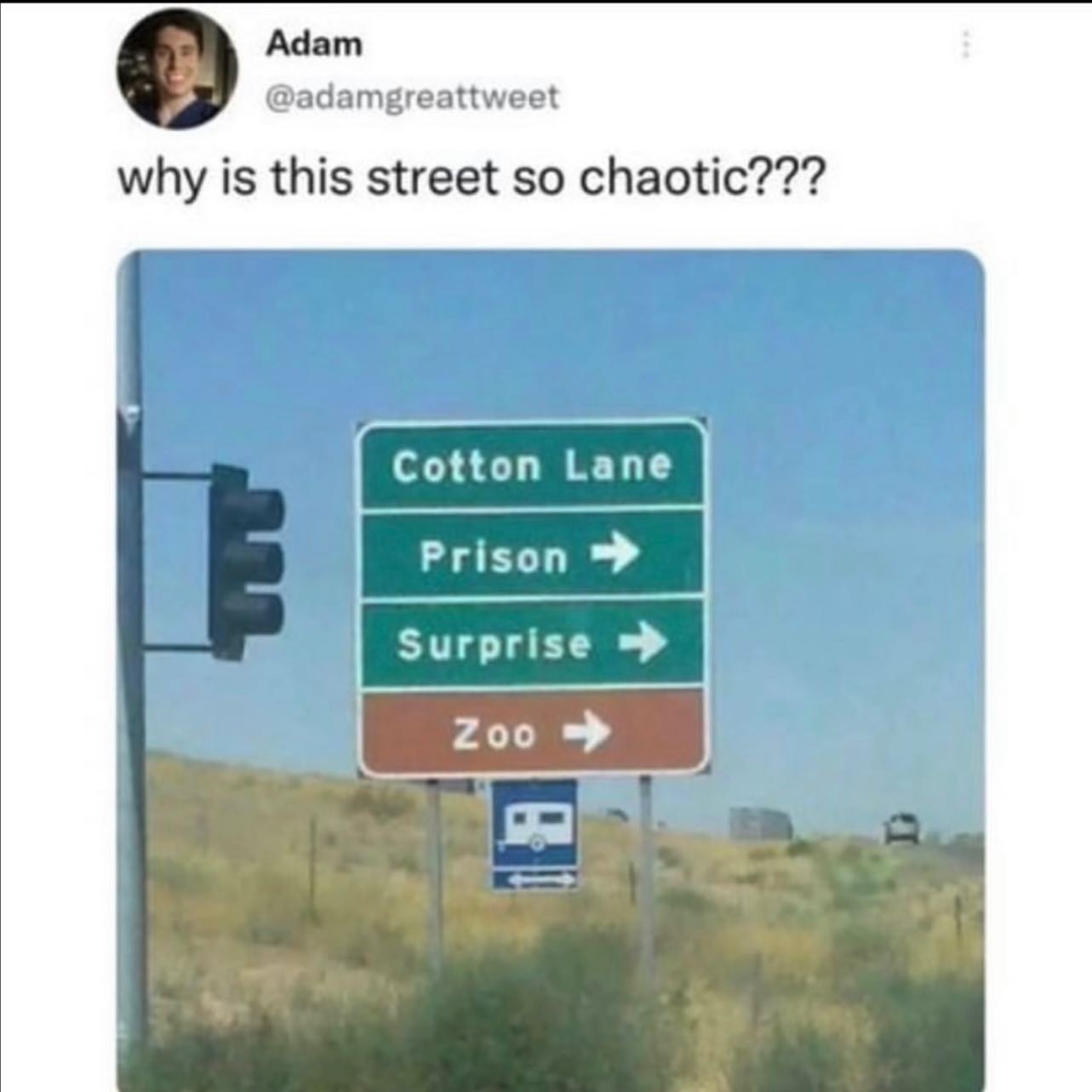
Oh hey, I know where this is. I’ve been here before. This is near Surprise, Arizona.
Cotton Lane is a road with cotton fields on either side of it for miles. There’s a prison nearby as well as the town of Surprise and the local zoo. This is all near Luke Air Force Base, west of Phoenix.
Yes this is correct, west valley checking in!
Plot twist: all of them are for the same place.


I have a strong feeling your prompt was literally just “cotton lane prison surprise zoo”
“For your birthday we will visit your father at prision, then I have a surprise for you, and then we will got to the zoo.”
Suprise definetly
I’m headed to go camping near the Cotton Lane Surprise Prison Zoo, why do you ask?
Why is zoo in red 😳
If the prisoners are bad they go into the cages of the most dangerous animals while the zoo is closed /s
Actual answer for anyone curious: In the US, most public points of interest are marked by brown signs (parks, libraries, zoos, historical sites, etc.)
And “traveler facilities” are blue, right? Camping, gas/food/lodging, hospital, rest areas?
Blue is just “informational”
Anything from upcoming ammenities to what radio station you should tune to for information during evacuations (hurricane evacuation routes have these regularly)
I’m trying to remember what I see every day now… I’m sure hospitals and the signs for food/lodging are blue. Maybe airports and train stations too?
When I picture signs for camp grounds, I imagine them as brown, but I could be wrong.
https://mutcd.fhwa.dot.gov/services/publications/fhwaop02084/index.htm
The use of red on signs is limited to stop, yield, and prohibition signs.
A white background indicates a regulatory sign;
yellow conveys a general warning message;
green shows permitted traffic movements or directional guidance;
fluorescent yellow/green indicates pedestrian crossings and school zones;
orange is used for warning and guidance in roadway work zones;
coral is used for incident management signs;
blue indicates road user services, tourist information, and evacuation routes;
and brown is for guidance to sites of public recreation or cultural interest.
🚨DANGER🚨ZOO🚨